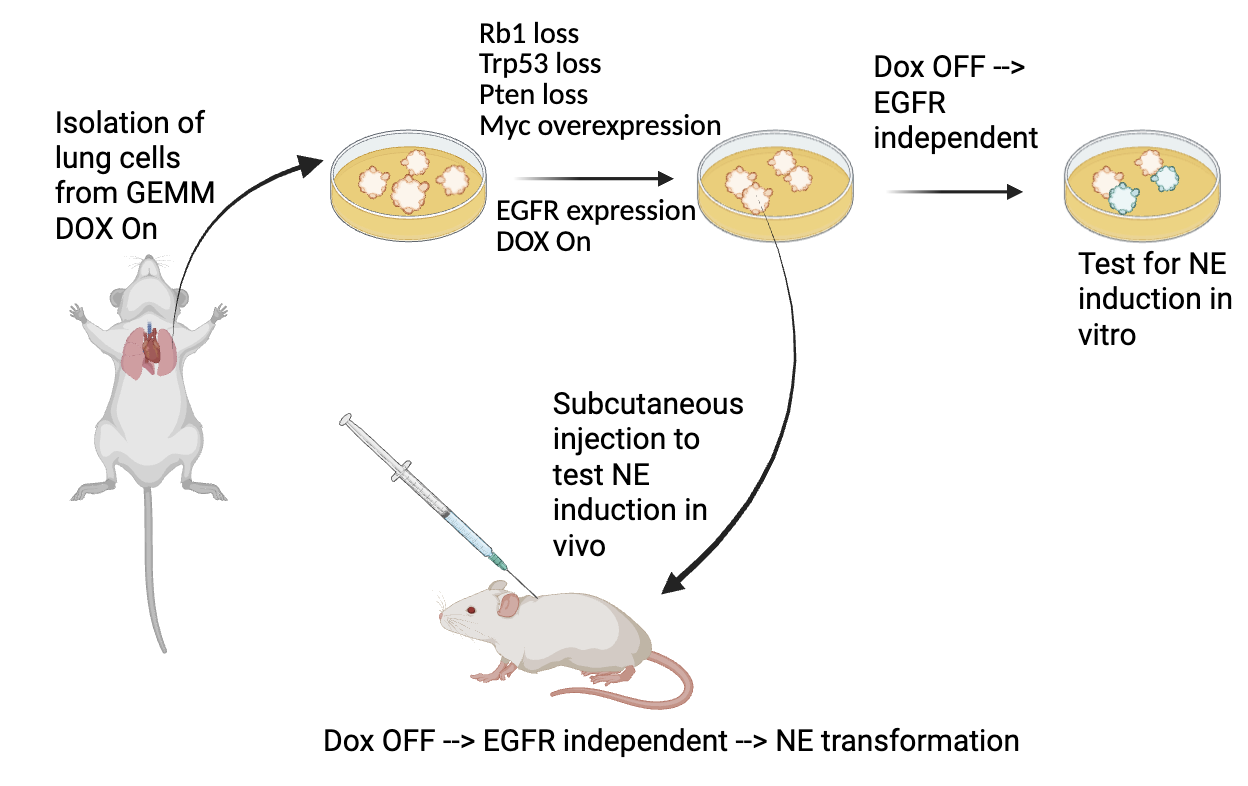
Lung adenocarcinoma (LUAD), a highly treatable lung cancer subtype, can transition to small cell lung cancer (SCLC), a subtype often associated with poor prognosis. Transformed SCLC (t-SCLC) is a neuroendocrine (NE) cancer that can arise in patients who develop resistance to epidermal growth factor (EGFR) inhibitors after cancer cells evade therapeutic intervention. Genetically engineered mouse models (GEMMs) can be used to study SCLC, with loss of Rb1 and Trp53 (in addition to Myc overexpression and Pten loss) leading to SCLC tumor formation in vivo. By using GEMMs, genetic contributors to the NE state and primary SCLC have been identified in vivo. However, in vitro lung models are unable to undergo the NE state transition, emphasizing the importance of studying how the tumor microenvironment (TME) can alter the NE state. We are using an EGFR-driven GEMM with loss of Rb1, Trp53, and Pten (with Myc overexpression) to model the transition from LUAD to SCLC and to identify which components of the TME can drive the NE state transition. Overall, this project identifies the molecular basis of state change-induced drug resistance, providing the foundation to identify new therapeutic approaches for these lethal cancers.